Loading...
Serving Dover, DE and surrounding areas. (302) 666-8088
Serving Dover, DE and surrounding areas. (302) 666-8088
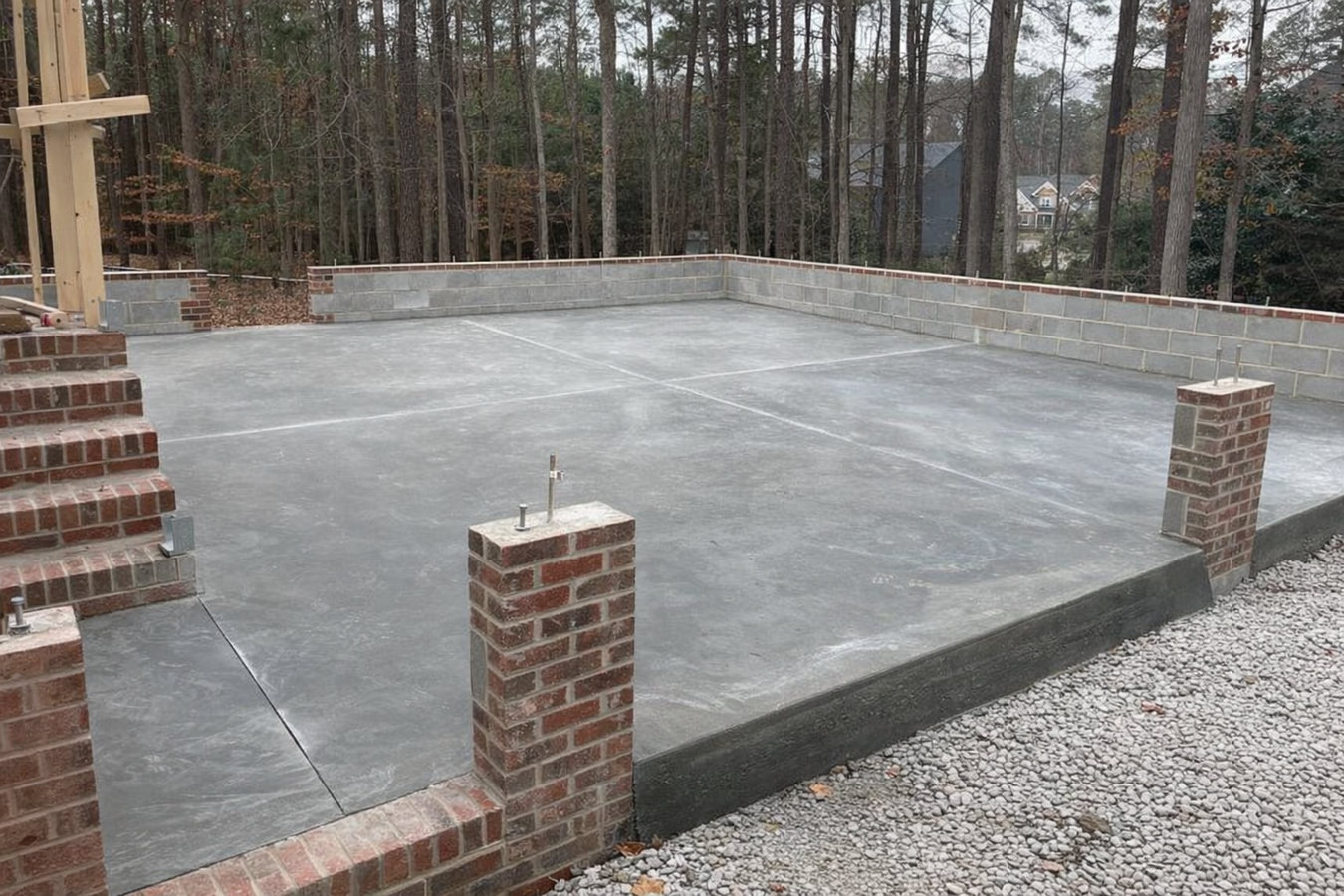
Your slab is the base everything else depends on. We build slab foundations in Dover prepared for local clay soil and Delaware humidity, with permits handled and moisture protection built in from day one.
Slab foundation building in Dover, DE involves grading and compacting the soil, laying a gravel drainage layer and vapor barrier, placing steel reinforcement, then pouring and finishing the concrete in a single pour, with a permit from the City of Dover or Kent County required before work begins. Most residential slabs take one to three days of active construction work, plus the permit review period and a curing window afterward.
A slab is one of the most practical foundation choices in the Dover area because the Mid-Atlantic climate and the region's relatively flat terrain suit it well. Dover's housing stock includes many mid-century homes that are now being expanded with garages, sunrooms, and accessory structures, all of which need a new slab. The challenge here is the soil, not the method. Kent County's clay-bearing ground shifts with moisture, and a slab that was not prepared with that in mind will show movement within a few years even if the concrete itself looks fine.
When the work goes beyond a standalone slab and involves load-bearing walls or deeper structural work, we coordinate slab pours with full foundation installation so every element of the structure sits on a properly engineered and permitted base.
If you are planning a new home, garage, workshop, or addition and the ground is currently empty, you need a slab foundation before anything else can be built. Dover is a practical area for slab construction given the soil conditions and typical building styles. Getting a contractor involved early, before plans are finalized, means the foundation design can be coordinated with what goes on top of it.
Hairline cracks in concrete are normal and usually harmless. But if you can fit the tip of a pencil into a crack, or if cracks run diagonally from the corners of doors and windows, the slab has moved more than it should. In Dover, the clay-bearing soil shifts enough with the seasons to cause this kind of movement when slabs were built without adequate preparation.
When a slab shifts or settles unevenly, the walls above it shift too, and the first thing homeowners usually notice is that doors and windows start to bind or leave gaps at the corners. This is especially common in Dover's older neighborhoods where original slabs did not include modern drainage and moisture protection. If this is happening in several locations at once, the foundation is worth having assessed.
Efflorescence, the white chalky residue that appears on concrete, signals moisture is moving through the slab. If you also notice a persistent musty smell near the floor, ground moisture is reaching the surface. Given Dover's annual rainfall and humidity, this is a common finding in homes where the original slab was poured without a vapor barrier.
Most of our slab work in Dover falls into two categories: new foundations for standalone structures and addition slabs poured adjacent to existing homes. Both involve the same preparation sequence, grading, compaction, gravel base, vapor barrier, reinforcement, pour, and finish, but the design details differ depending on what is going up on top. We also handle the permit application and coordinate the city or county inspection so the project is documented from start to finish.
Garage and workshop slabs are among the most common calls we get in Dover. Many homeowners are adding detached garages to properties that did not originally have them, and a detached garage slab requires its own drainage design, a surface finish that handles vehicle traffic, and a permit separate from the main residence. We also work alongside homeowners who are finishing existing garages, where we assess whether the original slab meets current moisture standards before any finishing materials go down.
For projects where the slab needs to tie into a broader foundation system, we coordinate with our concrete footings work to make sure both elements are designed and poured together. Footings placed correctly below the Delaware frost line are what keep a slab from heaving when the ground moves in winter, and combining both in one project avoids sequencing problems later.
Homeowners building a new home, garage, sunroom, or accessory structure that needs a properly prepared, permitted slab from the ground up.
Homeowners adding square footage to an existing home where the new section requires its own slab poured adjacent to or isolated from the original foundation.
Property owners who need a standalone slab for a detached garage or workshop, including proper drainage slope and a finish that holds up to vehicle traffic.
Any homeowner who wants a slab built to current standards, with embedded steel reinforcement, a compacted gravel base, and a full moisture barrier as standard inclusions.
Dover sits on Kent County ground that behaves differently from the sandy soils closer to the Delaware shore or the drier soils farther north. The clay-bearing soil here absorbs moisture and swells, then contracts when it dries. That seasonal movement is why slabs built in Dover without adequate subgrade preparation crack and shift in ways that look like concrete failure but are really a soil preparation problem. The concrete is doing what concrete does; the problem is what it was set on. Proper compaction, grading, and a drainage layer are not premium upgrades for Dover projects, they are the baseline.
Delaware's frost line sits at roughly 15 to 18 inches below the surface, which is shallower than northern states but still enough to cause heaving if footings are not set at the correct depth. Dover's winters bring repeated freeze-thaw cycles rather than sustained cold, and that cycling is what does the most damage to foundations that were not designed with it in mind. We set footings to the correct depth and time pours to avoid the temperature extremes that weaken fresh concrete.
We serve homeowners throughout the Dover area, including Smyrna, Milford, and Middletown. The soil and climate conditions across this region are similar enough that the same preparation standards apply throughout, and our crews know the local permit offices and inspection processes in each jurisdiction. The American Concrete Institute publishes industry standards for residential flatwork that inform the mix designs and finishing methods we use on every job.
Tell us what you are building, roughly how large the slab needs to be, and whether you have a timeline in mind. We respond within 1 business day to schedule a free on-site estimate. You do not need to have all the answers ready before you call.
We walk your property, assess the soil and drainage, and measure the area before quoting anything. Within a few days you receive a written estimate that breaks out site prep, materials, labor, and permit fees as separate line items so you know exactly what you are paying for.
Once you move forward, we apply for the required building permit through the City of Dover or Kent County depending on your address. This typically takes one to three weeks. We handle the paperwork, so you do not need to visit any permit office.
The crew grades and compacts the soil, lays the gravel drainage layer and vapor barrier, sets forms and reinforcement, then pours and finishes the concrete in a single pour day. A building inspector visits after the pour to sign off on the work before framing can begin.
We walk your site, assess the soil conditions, and give you a written estimate with no obligation. Permit season in Kent County fills fast, so lock in your project date before the spring rush.
(302) 666-8088Dover's ground expands and contracts with the seasons, and a slab poured on inadequately prepared soil will show movement within a few years. We compact and grade every site to account for local conditions before a drop of concrete goes down. That step determines whether your slab stays level for a decade or starts to shift within one.
We apply for and manage the building permit through the City of Dover or Kent County for every slab project. Your foundation goes on the public record as permitted and inspected, which matters when you sell or refinance. We have never left a client holding an unpermitted foundation.
Dover averages around 45 inches of rain per year and humidity stays high through spring and summer. Every slab we pour includes a compacted gravel layer and a polyethylene vapor barrier as standard, not as an upgrade. Moisture that works through an unprotected slab typically hides under flooring for years before the damage becomes obvious.
We have poured slabs for homeowners throughout Dover, Smyrna, Milford, Middletown, and surrounding communities in Kent County and beyond. Contractors who know this region understand the permit offices, soil variability, and the seasonal timing that matters for concrete in Delaware.
Every slab we pour in Dover and surrounding communities is built the same way: proper subgrade, full moisture protection, permitted and inspected. The steps that are invisible after the pour are the ones that determine whether your foundation lasts a generation or becomes a problem. We do not skip them.
For permit requirements in your jurisdiction, the City of Dover Department of Planning and Inspections is the authority for properties within city limits, and the Kent County Department of Planning Services handles unincorporated areas nearby.
When your project calls for a full basement or crawl space, we handle the entire foundation installation from excavation through waterproofing.
Learn moreFootings placed below Delaware's frost line are the starting point for any slab or wall that needs to stay put through winter cycles.
Learn moreCall us today or submit a request and we will have a written estimate to you within 1 business day. Spring permit season fills fast in Kent County, so the earlier you reach out, the better your start date options.