Loading...
Serving Dover, DE and surrounding areas. (302) 666-8088
Serving Dover, DE and surrounding areas. (302) 666-8088
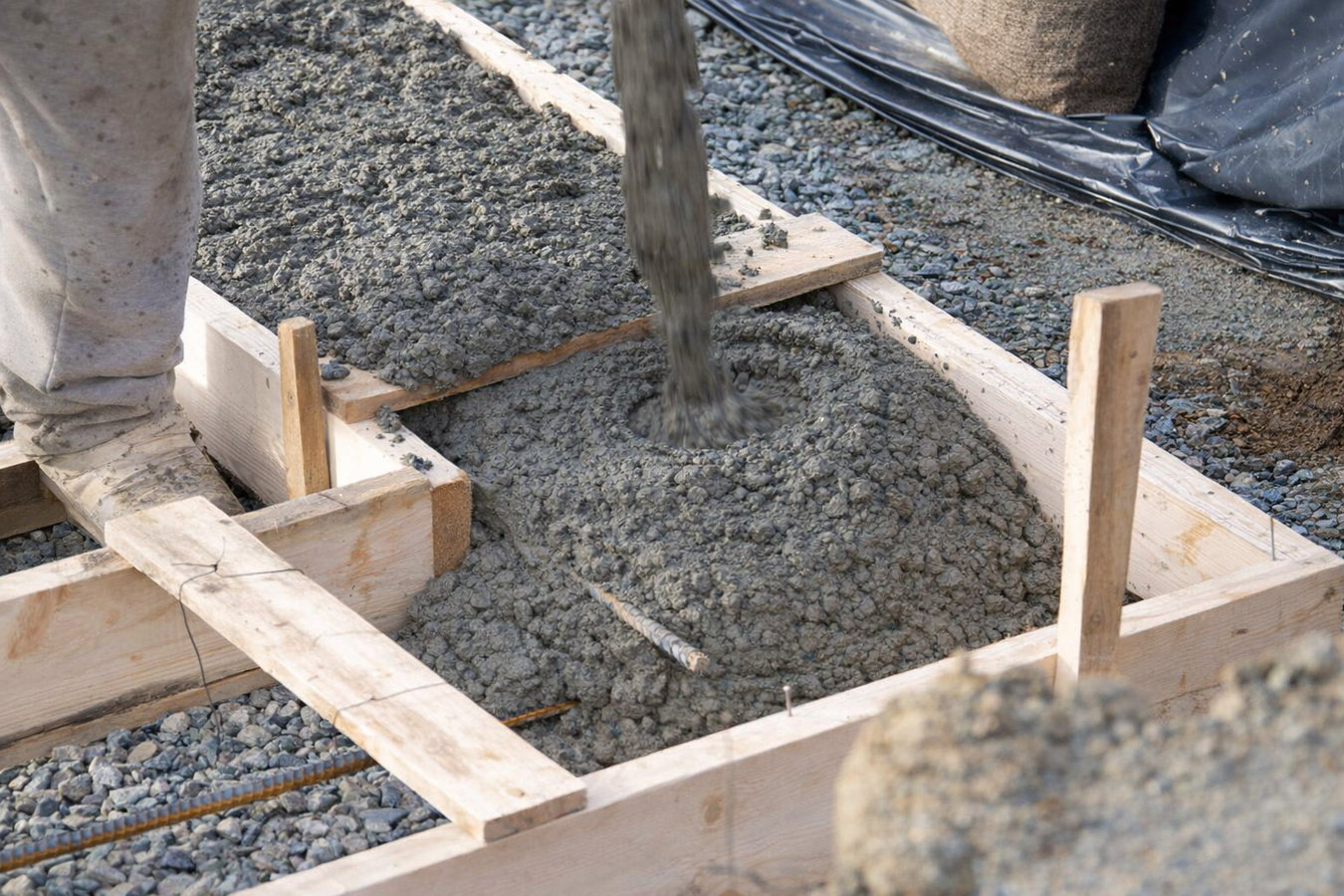
A deck, addition, or outbuilding is only as solid as what it sits on. We pour concrete footings in Dover below Delaware's frost line and sized for local clay soil, with city permits and inspection handled on every project.
Concrete footings in Dover, DE are excavated to at least 15 to 20 inches below grade to sit below the frost line, formed and reinforced with steel rebar as required, inspected by a City of Dover building inspector before any concrete is poured, and cured for three to seven days before framing begins. Most residential footing projects are poured in a single day once the permit is in hand.
Dover has a large number of mid-20th century homes, and many of those properties are now seeing deck replacements, additions, and accessory structures built on footings for the first time or rebuilt to current standards. The challenge in Dover is not the concrete work itself but the conditions underneath it. Clay-heavy soil, a frost depth that is shallow enough to feel unimportant but deep enough to destroy an underpowered footing, and a city permit process that includes a required pre-pour inspection all shape how footing work gets done here.
For projects that involve a larger structure, we often coordinate footings work with foundation installation so the excavation, drainage, and permit process are handled together rather than in separate trips through the city's inspection schedule.
If your deck surface is no longer level, or a gap has opened up between the deck and your home's exterior wall, the footings underneath may have shifted. In Dover's clay-heavy soil, this kind of movement is common after several wet-dry cycles. A tilting deck is not just a cosmetic problem - it is a safety issue that worsens with each passing season.
Horizontal or stair-step cracks near the base of a wall, or cracks running along the edges of a slab, can signal that the footing beneath is moving or was never adequate. Dover's soil expansion and contraction puts steady pressure on anything close to the ground. Small cracks tend to grow quickly once they start, especially if water gets in before winter.
When a footing shifts, the framing above it shifts too. If doors or windows in or near an addition have started sticking, jamming, or showing gaps at the corners, something may have moved at the foundation level. This is especially worth investigating in Dover homes where additions were built decades ago on footings that may not have been poured deep enough.
If you can see concrete peeking above the ground around a post or column, the footing has either heaved upward or the soil has eroded away from around it. Either way, a footing that is working its way out of the ground is no longer doing its job. This is a common sight in Dover yards after a wet winter followed by a dry summer.
Most residential footing work in Dover falls into new installation for a planned structure or repair and replacement of footings that have failed on an existing one. New installation is the more straightforward case: we take your project plans, confirm the required depth and size with Dover's permit office, excavate, form, reinforce, and pour to specification. The permit and inspection process creates a paper trail that protects you when you sell, refinance, or add on to the property later.
Repair and replacement is more involved because it starts with an honest assessment of what is already there. A deck or porch that has been shifting for years may need new footings placed in different locations rather than a straight replacement. For older Dover homes where an addition was built on footings that predate current requirements, the new footings for any further expansion have to meet today's standards even if the original work stays in place. We evaluate each situation before recommending a scope of work, and we do not suggest more than what the project actually needs.
Footings for larger structures, such as a full addition or a detached garage, connect directly to the foundation installation scope. When both are part of the same project, we handle excavation and inspections together. For projects that also involve a new outdoor surface nearby, we coordinate the footing grade with any adjacent foundation raising or slab work so drainage flows away from both elements as a unified system. The American Concrete Institute publishes the structural concrete standards we follow as the basis for rebar placement and mix design on every footing project.
Homeowners planning a new outdoor structure who need footings sized and placed correctly before framing starts, with a permit and city inspection on record.
Homeowners expanding their home's living space who need footings that meet current depth and reinforcement requirements, regardless of what the original house was built on.
Owners of older Dover homes whose existing footings are showing signs of heaving, cracking, or settlement, and who need a rebuild that meets today's standards.
Homeowners adding a garage, workshop, or large shed who need footings designed for the load and depth required by Dover's building department.
Delaware's frost depth sits at roughly 15 to 20 inches in the Dover area. That is modest compared to northern states, which leads some homeowners and even some out-of-area contractors to treat it as a minor concern. It is not. A single hard freeze is enough to move an improperly placed footing, and Dover winters freeze and thaw multiple times rather than staying cold. Each cycle puts another round of stress on a footing that was not deep enough to begin with. The cumulative effect shows up as a tilting deck or a gap at an addition wall after just a few years.
Dover's clay soil adds another layer of complexity. Clay absorbs water and swells when wet, then shrinks when it dries. That repeated movement applies pressure to footings from the side as well as from below, and footings that are not sized to handle that lateral stress will crack or shift over time. Kent County soil has a significant clay content throughout the Dover area, and contractors who are not familiar with this part of Delaware often underestimate how much it matters when specifying footing width and depth.
We pour footings throughout Dover and serve nearby communities including Smyrna, Middletown, and Milford. Soil conditions and permit requirements vary across this part of the state, and local experience with Kent County ground conditions is a meaningful advantage on a job that will be underground and out of sight for decades.
When you contact us, we ask a few basic questions about what you are building, where it sits on your property, and whether you have had any prior work done nearby. We schedule a free site visit before quoting, because footing costs depend on depth, soil conditions, and access that are hard to assess without seeing the yard. Expect the visit to take about 20 to 30 minutes. We respond to all inquiries within 1 business day.
Before any digging begins, we apply for the required building permit through Dover's Planning and Inspections Department. This typically takes a few days to two weeks depending on current city workload. We handle all paperwork, so you do not need to visit the permit office. We show you a copy of the approved permit before the crew arrives.
Once the permit is approved, the crew marks footing locations and excavates to the required depth below Dover's frost line. Before any concrete goes in, a city inspector visits to verify the holes are the correct size and depth. Your contractor schedules the inspection and handles the coordination. This checkpoint protects you from footings that were dug too shallow.
After the inspection clears, we place any required steel reinforcement and pour the concrete. Most residential pours wrap up in a few hours. The finished footings need three to seven days to cure before framing can begin. We provide a copy of the city inspection sign-off before leaving the site so you have documentation for your records.
Free on-site estimate, no obligation. We handle the Dover permit and schedule the city inspection before any concrete is poured.
(302) 666-8088Delaware's frost depth is 15 to 20 inches in the Dover area, and every footing we pour goes below that line. A footing poured too shallow will heave when the ground freezes, shifting the structure above it. We confirm depth requirements for each project before we dig and do not adjust them to save time on the job.
Dover's clay-bearing ground swells when wet and shrinks when dry, a cycle that destroys footings not designed around it. We size and place every footing with local soil behavior in mind, and in some cases recommend a gravel drainage layer beneath the footing to keep moisture from pooling under the concrete. Local experience with Kent County soil is different from general footing knowledge.
We pull the Dover building permit and schedule the pre-pour city inspection on every footing project without exception. That documentation proves the work was done correctly and protects you during a sale, refinance, or future addition. Unpermitted footing work is one of the most common issues Dover homeowners encounter during real estate transactions.
We pour footings throughout Dover and neighboring communities including Smyrna, Milford, and Middletown. The{' '} American Concrete Institute{' '} provides the technical standards we follow for reinforcement and mix design, applied to the specific soil, frost, and permit conditions of this part of Delaware. Local presence plus technical standards is what produces footings that hold.
Footings are the one part of a construction project that becomes completely inaccessible once the work is done. Getting them right the first time is not optional - there is no fixing a footing that was too shallow or too narrow without tearing out the structure above it. That is the reason local soil knowledge, proper permits, and a mandatory city inspection matter on every single job.
When footings have allowed a structure to settle unevenly, foundation raising corrects the elevation before new footings or additional structural work is performed.
Learn moreLarger structures require a complete foundation system rather than individual footings - we handle full foundation installation as a single coordinated project.
Learn moreSpring permit queues move slowly - contact us now and we will handle the application while the calendar is still open.