Loading...
Serving Dover, DE and surrounding areas. (302) 666-8088
Serving Dover, DE and surrounding areas. (302) 666-8088
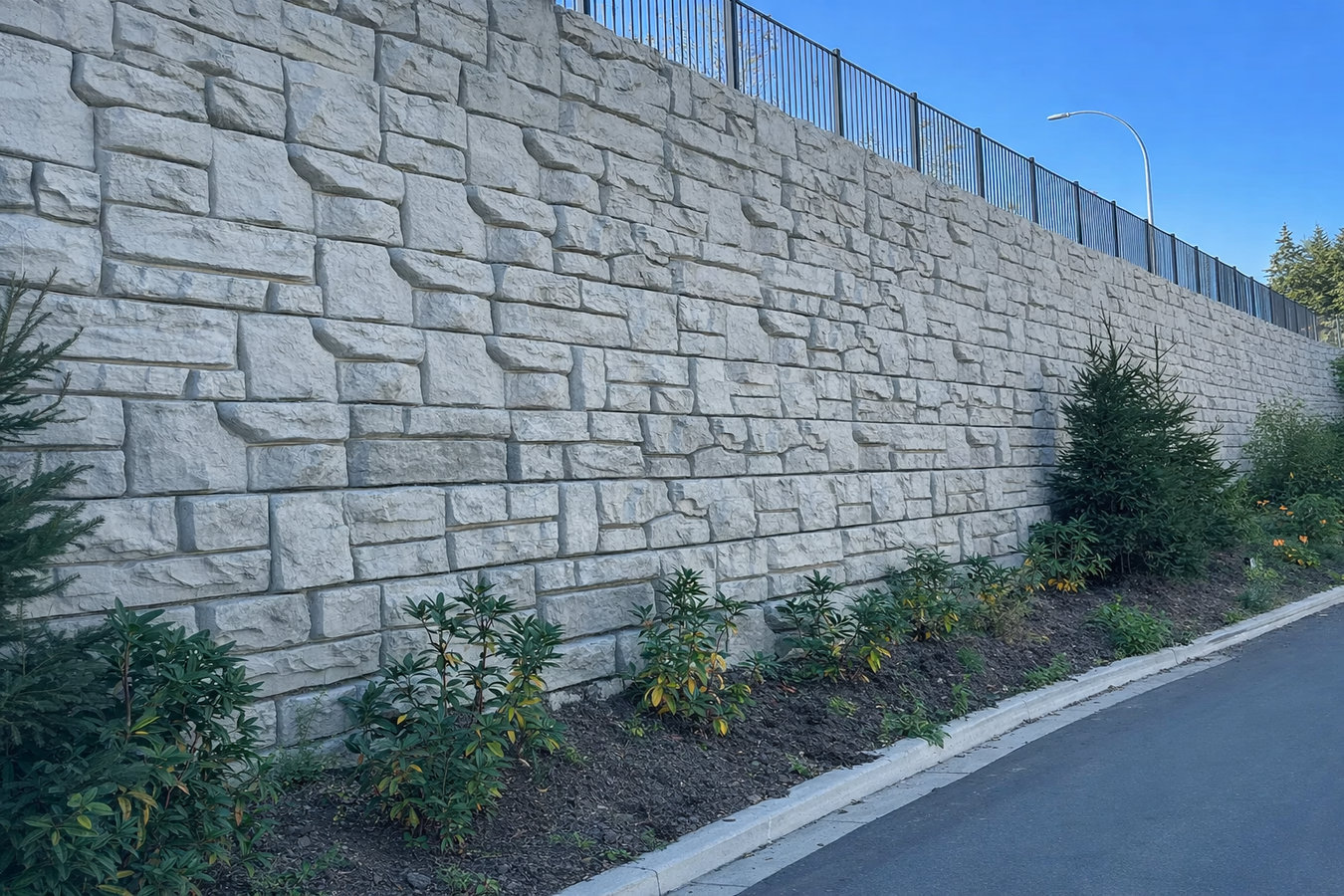
A slope that is washing away or an old wall that is leaning will not fix itself. We build concrete retaining walls with the footings and drainage that Dover winters demand.
Concrete retaining walls in Dover, DE hold back soil on slopes and grade changes so erosion, water, and ground movement stay away from your yard, driveway, and foundation - most residential walls take two to five days to build plus a permit processing period of one to two weeks beforehand.
A retaining wall is only as good as what you cannot see: the footing depth, the drainage behind it, and how well the soil was compacted. Dover sits on clay-heavy ground that holds water rather than letting it drain, and Dover winters bring repeated freeze-thaw cycles that push on anything in the ground. Both conditions demand a wall built with those stresses in mind from the start.
If you are dealing with a failing older wall, the underlying problem is almost always drainage. We also build concrete floors and can address grading around your home as part of the same project when drainage problems affect more than one area.
After heavy rain, if you see soil, mulch, or gravel collecting at the base of a slope, the ground is moving. Dover averages about 45 inches of rain per year, and without something holding that slope in place, erosion worsens each season. The problem will not stop on its own.
A retaining wall tilting away from the slope is under stress it was not designed to handle. In Dover's clay soil, this usually means drainage behind the wall has failed and water pressure has built up. The wall is telling you it is losing the fight, and the longer you wait, the more soil movement occurs.
If water collects against your house after a storm rather than draining away, a slope or grade problem may be directing runoff toward your foundation. A retaining wall combined with proper grading can redirect that water before it causes basement moisture or foundation damage.
Older walls in Dover, especially those built before current drainage standards, often develop diagonal cracks at corners or horizontal cracks along the face. Small surface cracks can sometimes be repaired, but cracks running through the full wall thickness, or widening over time, usually mean the wall needs to be rebuilt from the footing.
Most residential retaining walls in Dover use either poured concrete or concrete masonry units (CMU block). Poured concrete walls are the strongest option for taller walls holding significant soil loads. They are poured monolithically, which means no joints for water to seep through, and they can be finished smooth or textured depending on how visible the wall will be.
Concrete block walls are a practical choice when the slope follows a curve, steps down gradually, or when you want a wall that looks more finished in a landscape setting. Both types require the same critical elements: a footing set below the frost line, gravel backfill, and a drainage pipe behind the wall. We also offer repair and drainage retrofits for existing walls that are structurally intact but showing signs of failure from poor original drainage. For projects where one tall wall is not permitted or practical, we build concrete steps and tiered terrace systems that manage grade changes across multiple levels.
Every retaining wall project we take on in Dover is tied to a permit - no exceptions. Walls over a certain height require city review, and we handle that process from application through inspection sign-off.
Properties that need maximum strength and a clean, monolithic appearance on larger slopes.
Homeowners who want a flexible, modular wall that can follow curves or step down a grade change.
Existing walls that are structurally sound but showing signs of drainage failure behind them.
Steep slopes where a single tall wall is not practical or permitted, requiring two or more shorter walls with terracing between them.
Dover sits in a freeze-thaw climate zone where the ground does not stay frozen for months at a time the way it does farther north. Temperatures drop below freezing, warm up, and drop again many times each winter. That cycling movement pushes on footings that are set too shallow, which is why the frost depth for this part of Delaware, roughly 18 to 24 inches, is not a number to cut corners on. A wall whose footing sits above that depth will start to tilt within a few winters.
The clay-heavy soil found across much of Kent County adds a second challenge. Clay expands when wet and contracts when dry. A wall built into clay without a gravel drainage layer behind it traps water during Dover's wet springs and late-summer storms, building up hydrostatic pressure until something gives. Dover's older neighborhoods have a large number of walls built in the 1960s and 1970s that were never properly drained, and many of those are now leaning or cracked.
We serve homeowners across the Dover region, including customers in Smyrna, Milford, and Georgetown who deal with the same soil and drainage conditions. The permit and inspection requirements are similar across these communities, and we know what each local office expects.
Describe your slope, erosion problem, or existing wall. We respond within 1 business day to schedule a free on-site estimate. You will not be pressured to decide on the spot.
We walk the area, assess soil conditions, measure the slope, and review any existing drainage. You receive a written estimate covering scope, permit process, and total cost.
We apply for the City of Dover building permit on your behalf. This typically takes one to two weeks. Work is scheduled after permit approval so your project is fully above board from day one.
The crew excavates to footing depth, builds the wall, installs drainage behind it, and backfills with compacted gravel and soil. Construction of a standard residential wall takes two to five days.
Free on-site estimate. Written quote before any work starts. We handle the City of Dover permit from application to inspection.
(302) 666-8088We set every wall footing at least 18 to 24 inches deep, below the frost line for the Dover area. Walls built with shallow footings start leaning within a few winters here - ours stay put.
Every wall we build includes gravel backfill and a perforated drain pipe from day one. In Dover's clay soil, drainage is not optional. Skipping it is the most common reason walls fail within five years.
We pull the required City of Dover building permit before any work starts, and we coordinate the inspection at completion. Your wall is on record with the city, which matters when you sell.
We have built retaining walls throughout Dover, Smyrna, Middletown, Georgetown, and across the wider Kent and Sussex County area. Local experience means we know what soil conditions and permit offices to expect.
The details that make a retaining wall last in Dover, proper frost-depth footings, drainage behind the wall, and a city-issued permit, are not extras. They are the baseline. Every project we take on in Dover includes all three because leaving any one out is how walls fail. You can verify our Delaware contractor license through the Delaware Division of Professional Regulation, and we welcome requests for local references before you decide.
Pour a new concrete floor in your basement or garage with proper sub-base prep for Dover's clay soils.
Learn moreAdd durable concrete steps that connect grade changes safely and match your new wall.
Learn moreSpring and fall are the best windows for wall work in Dover, and crews book up fast. Call or request an estimate today to get on the schedule before the rush.